26f7.jpg?format=1500w)
How Can Dairy Farmers Prepare for Emergencies Pre-Emergency?
Dairy farmers have a lot of responsibilities. I can vividly remember the first time I left the trauma bay, wondering if that farmer had a tourniquet nearby, would they have survived the tragic farm accident that sent them to the hospital and claimed their life.
It wasn’t long after I married a farmer myself and became more involved in the agriculture community that those farm accidents quickly became about people I knew. It was then that I realized that something had to be done.
Key Takeaways:
Dairy farmers can enhance safety by developing a comprehensive written emergency plan that addresses potential hazards, including injuries, equipment accidents, weather-related events, and animal health issues.
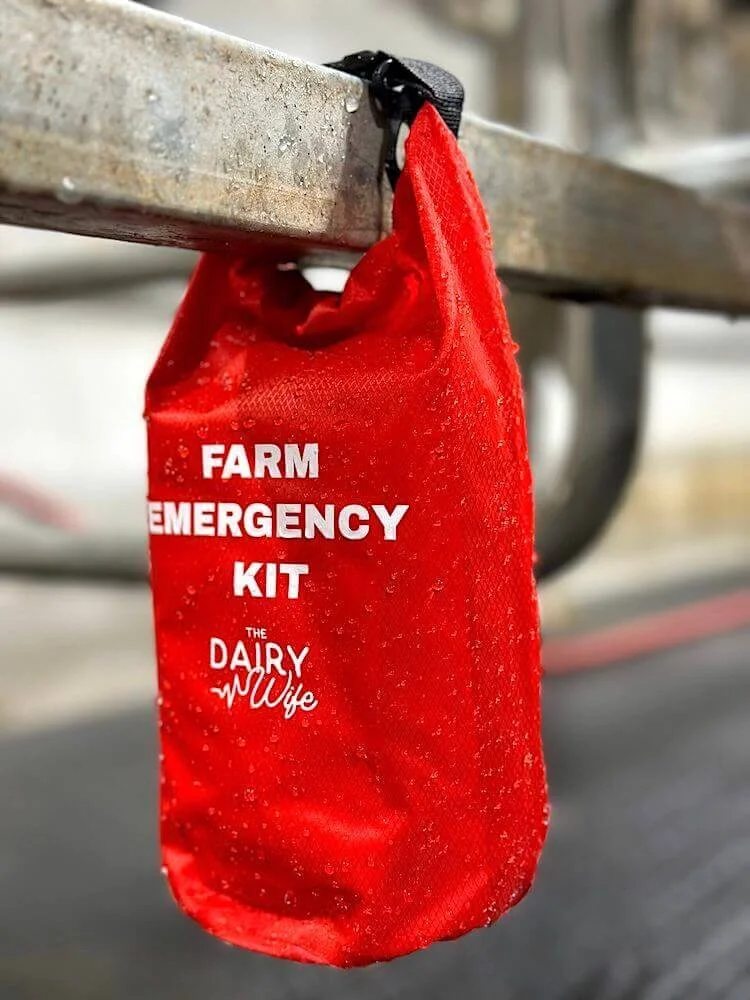
Having a stocked farm emergency kit with items like first aid supplies, flashlights, batteries, phone numbers, and basic tools helps farmers respond quickly in the critical first minutes.
Training family members and employees on emergency procedures, including who to call and where supplies are stored, prepares the entire farm team to act fast and confidently in a crisis.
Why Does Farm Safety Hit So Close to Home?
Farm safety is something that we have all heard about in various ways, and we have heard how to prepare farm equipment and tractors. We’ve heard about the grain bin entrapments and the PTO (Power Take-Off) shaft amputations when clothing or hair gets caught.
While preparing equipment and tractors is equally as important and plays a huge role in preventing farm tragedies and accidents, it is also important to note that farm accidents still happen despite the best preparedness strategies.
We focus on preparing and preventing farm accidents, but how prepared are we to help provide life-saving measures in those critical first few minutes when tragedy does strike on our farm?
What Can a Trauma Nurse Teach Us About Farm Safety?
Seven years and my entire nursing experience thus far has been in a level one trauma center emergency department serving rural Virginia. I’ve seen the amputations, the traumatic farm injuries, the broken bones, and the lacerations. I’ve seen the difference that being prepared with a few lifesaving tools can have on someone’s life, and I’ve seen how fragile life can be, regardless of how invisible we think we are.
It was while we were building our new double 48 parallel parlor that it dawned on me as I was trying to purchase a farm first aid kit for the new office in the barn. I couldn’t find exactly what I was looking for. The kits I was looking at were either ridiculously expensive or didn’t have the lifesaving tools that I felt like we needed on our farm in the event of an emergency.
I decided to create my own tools and resources for farmers.
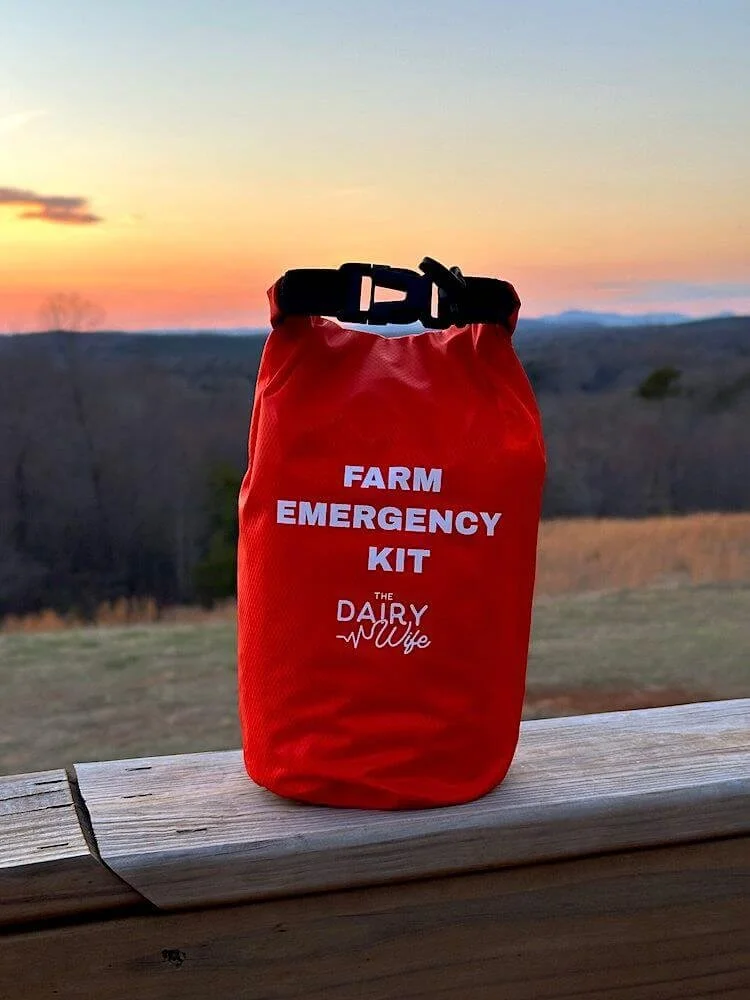
It started as five lifesaving tools I have absolutely seen save lives over the years and has since expanded into Farm Emergency Kits and Emergency Cab Kits to keep on our operation and in the cabs of our equipment.
What Are 5 Non-Negotiable Tools Dairy Farmers Should Have?
Today, however, I want to share with you the five items that I immediately knew we needed to have on our farm to give anyone who suffered an injury the best chance of survivability. In no particular order, other than the tourniquet, which in my personal opinion is the most important piece of equipment you can have on your farm to save a life, these items are non-negotiables on our farm.
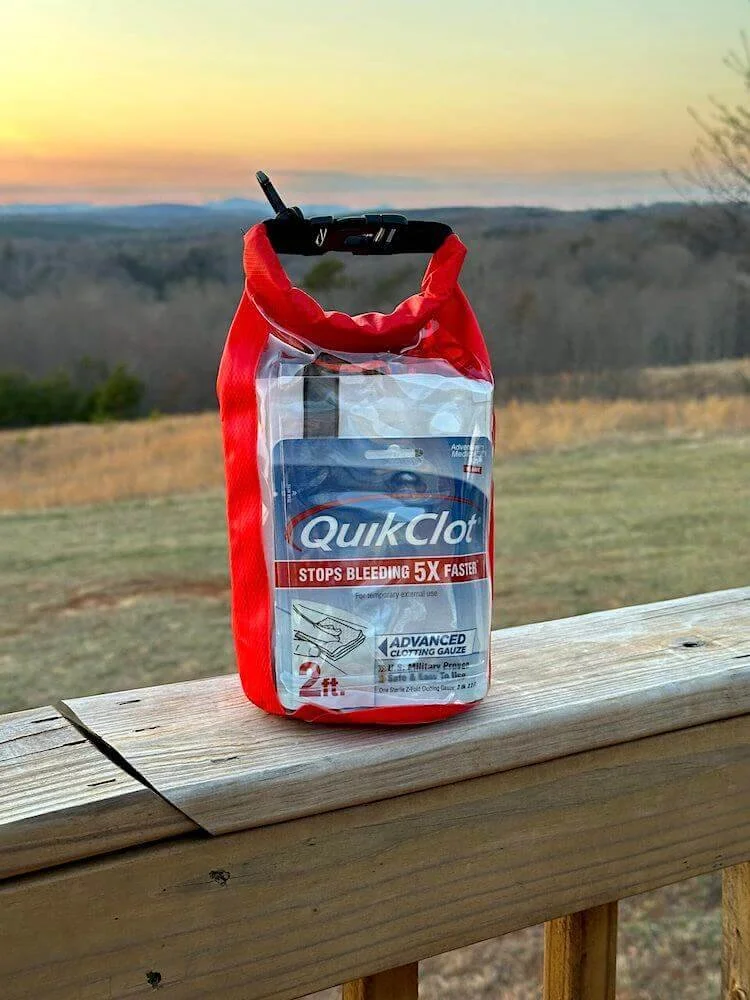
Tourniquets: I use tourniquets to stop severe bleeding in an emergency. They’re a critical tool when dealing with serious injuries. They are used most on limbs (think arms and legs) and stop the blood flow and circulation to the injured limb. Arguably, the single piece of equipment I have seen save the most lives in traumatic accidents.
QuikClot: This hemostatic agent is designed to stop bleeding fast. When accidents happen—whether it’s from sharp tools, machinery, or animals—QuikClot can mean the difference between a manageable injury and a life-threatening situation. I always keep it on hand for those just-in-case moments.
Coban (Or Vet Wrap): This stretchy, self-adhering bandage is one of my go-to supplies. I use it to secure dressings or apply pressure to control bleeding. It’s easy to use and incredibly versatile, making it a must-have in any farm first-aid kit.
Whistle: A simple but often overlooked tool. I carry a whistle because it can be a lifesaver in an emergency—whether I need to signal for help in a remote area with poor cell service or get someone’s attention to stop a tractor in its tracks.
CPR Shield: In a cardiac emergency, I use a CPR shield to protect both myself and the person I’m helping. This compact, disposable barrier ensures safety and hygiene while performing chest compressions and rescue breaths. It’s a small but essential tool I never go without.
Are You Ready If an Emergency Happens on Your Farm?
I truly hope you never need to use any of these items, but with planting season just around the corner, are you prepared if there were a farm accident or emergency on your dairy farm?
FAQs About Dairy Farming Emergencies
Q: How can dairy farmers prepare for emergencies before they happen?
A: Dairy farmers can prepare by creating a written emergency plan, stocking farm emergency kits, posting important phone numbers, and making sure every family member or employee knows what to do in different types of emergencies.
Q: What should be included in a farm emergency kit for dairy farmers?
A: A farm emergency kit should include bandages, gauze, antiseptic, gloves, a flashlight, extra batteries, a phone charger, basic tools, and a list of emergency contacts such as veterinarians, medical providers, and utility companies.
Q: Why is training the farm team important for emergency preparedness?
A: Training ensures that everyone on the farm knows where emergency supplies are located, how to use them, and who to contact first, which saves time, reduces panic, and helps protect both people and animals when an emergency occurs.
How Is The Dairy Alliance Helping Bring These Kits to More Farms?
Recently, I partnered with The Dairy Alliance to expand this mission and help more farmers across the region stay prepared. Together, we’re working to distribute farm emergency kits to dairy producers, giving them access to lifesaving tools and guidance on how to use them effectively.
This partnership empowers farm families to take control of their safety, protect their teams, and ensure help is never out of reach.
I would love to continue this conversation with you and answer any other farm emergency-related questions that you may have. If you are interested in following the conversation, please don’t hesitate to visit my website at www.thedairywife.com or send me an email at thedairywife@gmail.com.
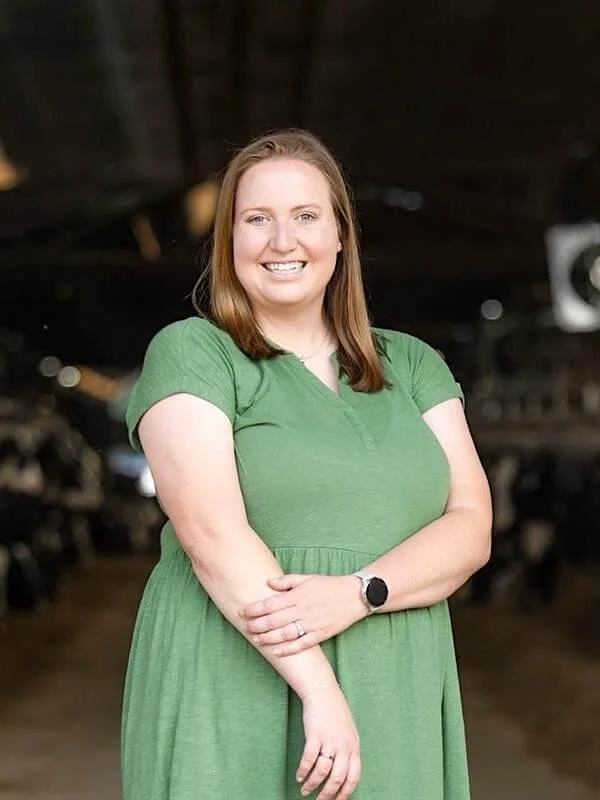
Katie Hammock is a wife to a Virginia dairy farmer, an ER nurse, and a mom. She’s spent her career treating the worst of the worst, from life-threatening injuries and trauma cases to far too many farm accidents. But she’s also spent her life in agriculture, watching firsthand how dangerous farm work can be. She knows what it’s like to hear about yet another farm injury and wonder, What if they had been prepared?
After seeing too many preventable tragedies and realizing there wasn’t a farm emergency kit that met people’s needs, she decided to create one herself. From there, her mission grew to educate, equip, and empower farm families and agricultural businesses to be ready before disaster strikes.
Follow her journey on Facebook at The Dairy Wife and Instagram at @thedairywife.
Related Posts