.jpg?format=1500w)
What Do Dairy Milk Fat Percentages Even Mean?

Milk fat percentages displayed on milk cartons and bottles can cause a lot of confusion. One simple question gets asked a lot: how much fat is in whole milk? A misconception of what “whole milk” contains makes it difficult for consumers to choose the dairy milk right for them and their families. Therefore, what do the milk fat percentages mean?
Key Takeaways
Milk fat percentages like 1%, 2%, and whole milk describe the percentage of fat by weight in the milk, not how much fat has been removed.
Whole milk has about 3.25–3.5% milk fat (around 8 grams), 2% has about 5 grams, 1% about 2.5 grams, and skim has 0 grams of fat per serving.
All dairy milk fat levels provide the same core nutrients and protein; the main differences are fat content and calories, not safety or overall nutrition.
Milk Fat Percentages: What is 2 Milk? What is 1 Milk?
According to the IDFA (International Dairy Foods Association), bovine milk consists of 87% water and 13% milk solids. What this means is that the milk solids right from a cow's udder contain about 4% fat and 9% non-fat.
It is important to understand that when you purchase milk, the 1% or 2% does not represent the amount of milk fat remaining from 100% milk fat. The percentage on the milk container is the amount of fat in the milk, expressed as a weight. As in, 1% does not mean 99% of the milk fat is gone. In other words, 1% means that the total serving consists of 1% milk fat, not 1% of the original amount of milk fat.
What Percent Fat is Whole Milk?
By understanding this, the term “whole milk” does not mean 100% milk fat. Whole milk contains approximately 3.25-3.5% milk fat or 8 grams.
What is 2 Milk?
Lower fat milk such as 2% contains 5 grams of fat.
What is 1 Milk?
Beneath 2% is 1% milk with 2.5 grams of fat. Finally, skim or fat-free milk contains 0 grams of milk fat.
Interesting Information About Milk Fat Percentages
The process to change the amount of milk fat found in milk is simple, and it does not involve diluting the milk with water. Instead, the fat is simply skimmed off the top of milk before homogenization. Remember, before homogenization, where milk is essentially shaken to create a balanced consistency, milk and its cream separate. By removing all 8 grams of milk fat and then adding back the preferred portion, consumers can easily choose the milk that best fits their palates.
Regardless of which fat percentage you choose, all dairy milk contains the same 13 essential nutrients, including 8 grams of high-quality protein. The only difference is the milk fat and accompanying calories, which are at most approximately 150 calories per serving.
All varieties of dairy milk — traditional or organic, chocolate or white – are safe and wholesome to drink. Strict standards of practice and government regulations in the United States ensure that all milk you buy at the store is safe for you and your family to drink.
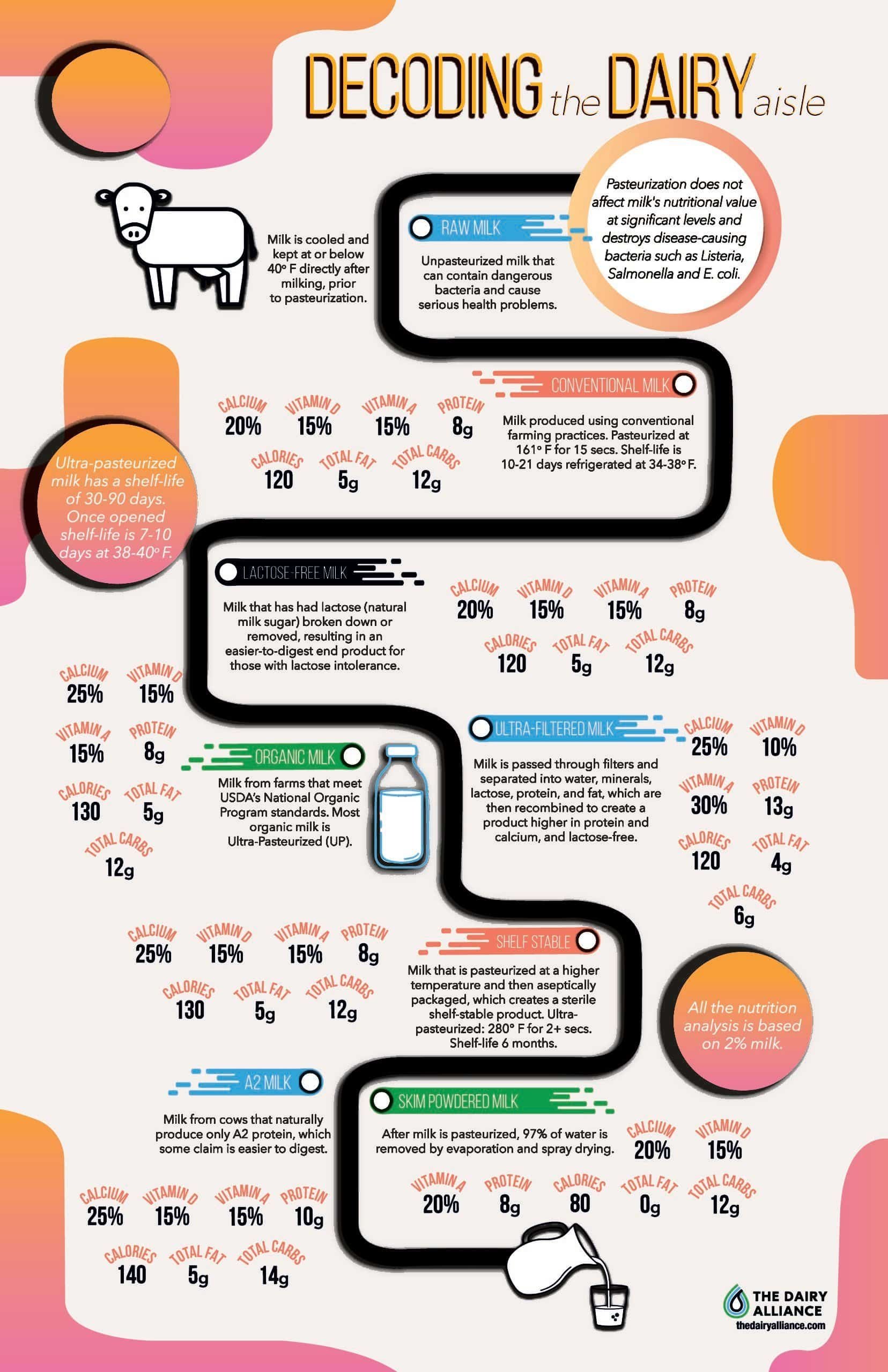
This infographic breaks down the nutritional information for each offering of real dairy milk.
Q&A on Milk Fat Percentages
Q: What do milk fat percentages like 1%, 2%, and whole milk actually mean?
A: They show how much of the milk’s weight is milk fat. For example, 2% milk means 2% of the liquid is milk fat, not that 98% of the fat has been removed.
Q: How much fat is in whole milk compared to lower-fat milks?
A: Whole milk has about 3.25–3.5% fat, roughly 8 grams per serving, while 2% milk has about 5 grams, 1% has about 2.5 grams, and skim has 0 grams of fat.
Q: Do milk fat percentages change the nutrition of milk?
A: All milk fat levels offer the same essential nutrients and high-quality protein; choosing whole, 2%, 1%, or skim mainly changes the amount of fat and calories in each serving.
The Dairy Alliance Appreciates Milk Fat
Here at The Dairy Alliance, we are a proud supporter of dairy farms, dairy cows, and dairy farmers nationwide. Cow milk, as part of a healthy well-balanced diet, is essential for growth and healthy bodies in people of all ages.
Which percentage of milk fat do you prefer? Whatever your personal choice is, The Dairy Alliance offers a plethora of recipes for your taste.
Related Posts