.jpg?format=1500w)
Meet the Students Working on Campus Dairy Farms This School Year
All around the Southeast, students, parents, and teachers are gearing up for the back-to-school season. But for some college students, "back to school" means more than just hitting the books. It also means early mornings in the barn, feeding calves, milking cows, and gaining real-world experience that goes far beyond the classroom.
This month, we’re highlighting a few of these dedicated students who are making the most of their time on campus by working on their university’s dairy farm. From hands-on animal care to learning the ins and outs of agricultural science, their stories show how meaningful, memorable, and even life-changing a dairy farm job can be.
Join us as we celebrate their hard work, their passion for dairy, and the valuable lessons they’re taking with them into the future.
Celia Johnson at Western Kentucky University Dairy in Bowling Green, KY
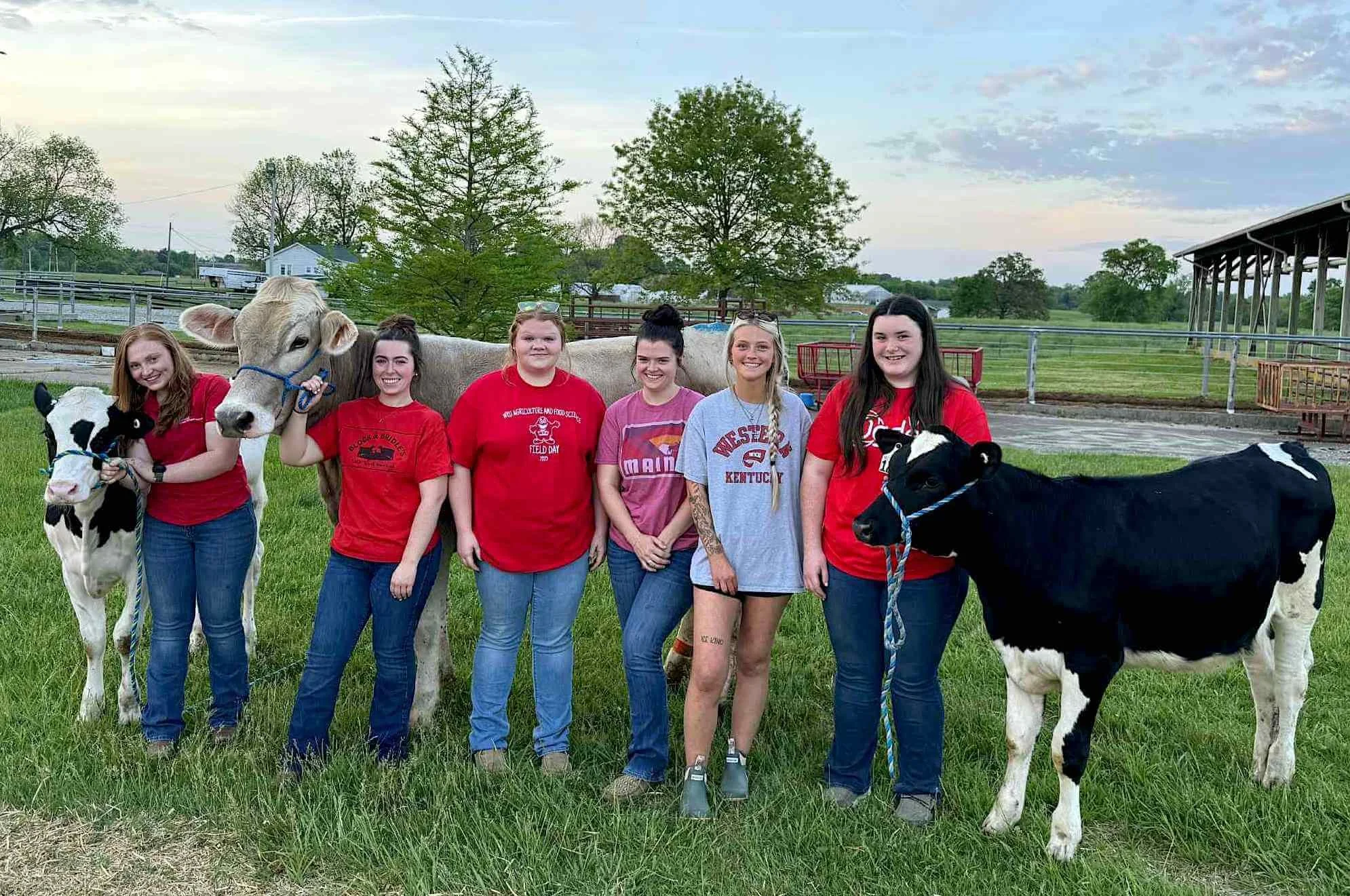
“My name is Celia Johnston. I work at the Western Kentucky University Dairy. I decided to join the team at the university dairy because I’ve always had a passion for large animals, particularly cattle. Having some prior experience on a dairy farm, I knew the challenges of taking on the role. I chose to accept the position because it’s a unique experience and skill set that would set me apart from my peers and allow me to expand my understanding of food production. Juggling course loads and workloads is a challenge; adding in club and Army ROTC obligations makes it increasingly difficult. I work hard to keep an accurate planner to stay organized, and I’ve learned a lot about time management along the way.
“I wish more students understood the hard work and care that goes into putting food on their plates. We support students from our Block and Bridle Club who are interested in learning to show dairy cattle, as well as hands-on labs for the animal science courses. If anyone would like to be involved at our university dairy, students can take any animal science lab, join the Block and Bridle club, or put in an application to join the team.”
Megan Mallory at Dairy Complex at Kentland, Virginia Tech in Blacksburg, VA
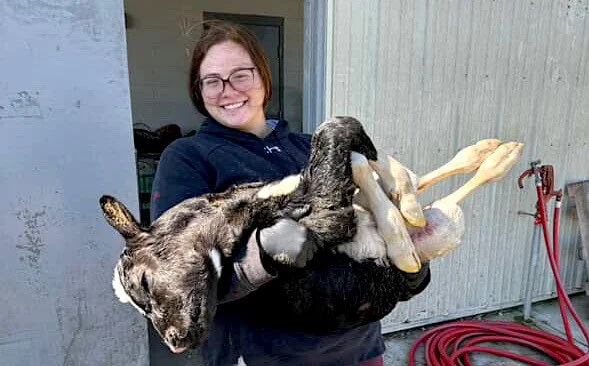
“I took a chance on something new working at the dairy—and haven’t looked back since! I start the day milking, then we move on to calf care —feeding, monitoring health, and treating any calves that need attention. From there, it’s whatever the farm needs: cleaning, rebedding, or caring for newborns. No two days are the same!
“Sometimes balancing school and work is tough, but spending time at the dairy is my outlet. It gives my mind a break from school and lets me reset. Working with animals is my happy place, and it reminds me why I am passionate about agriculture in the first place.
“There are different ways to get involved with the university dairy. We hire student employees to help with dairy operations. There is always research going on, too, and students can get involved by connecting with professors on those projects.”
Leah Walker at Bearden Dairy Research Center, MSU in Starkville, MS
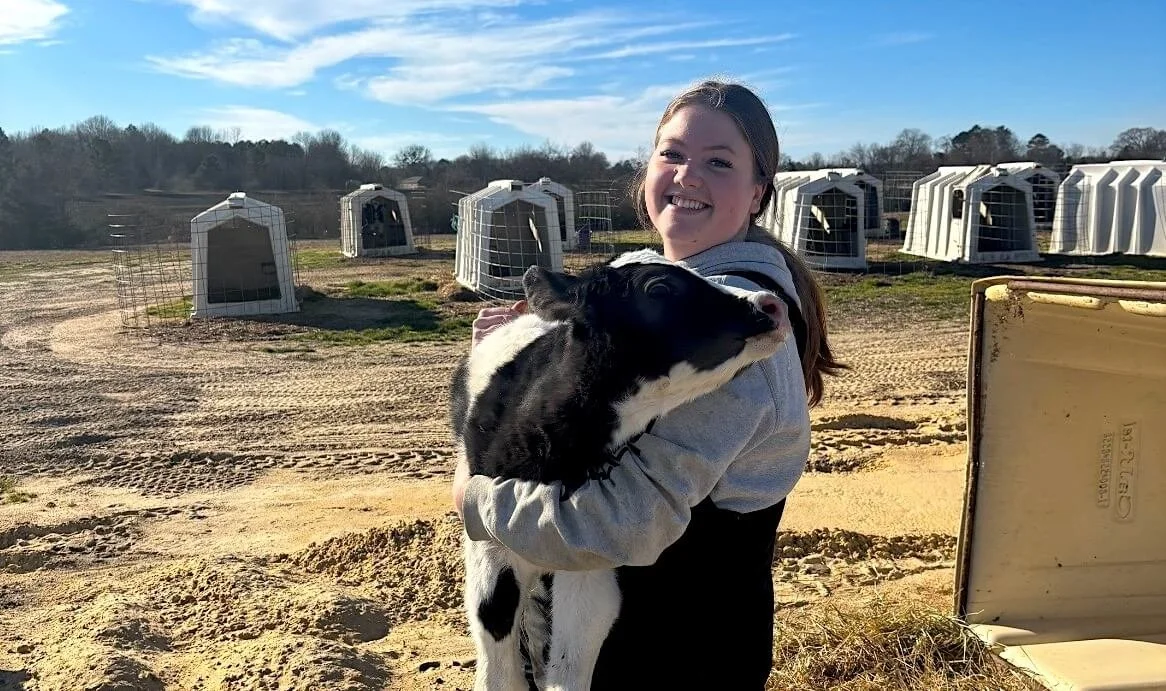
“My name is Leah Walker, and I started at the MSU Dairy in February of 2024. I have worked with livestock since I was little, however I was missing experience with dairy cows specifically. I wanted to learn about them and all that goes into simply buying a gallon of milk from the MAFES store on campus.
“Anyone and everyone is encouraged to get involved at our dairy just like I did. To work on the farm no experience is required, and all majors are welcome. Setting up an interview with the assistant herdsman is all you need to do! Aside from being a student worker, there are other ways to get involved. In the Animal and Dairy Sciences Department at MSU we have several wonderful professors and graduate students dedicated to the animal industry, with a few who focus on dairy cows. Working alongside those people, joining clubs such as Block and Bridle and the Dairy Club, volunteering at events on the farm like LegenDairy Day, internships, and even some study abroad opportunities are great ways to learn about dairy and make some friends along the way! The opportunities are endless!
“An average day at the dairy can mean a lot of different things. Simply put, during a shift there are three milk hands and one feed hand who are responsible for milking and feeding our milking herd that is around 120 head, freestalling, feeding calves in hutches, feeding yearling pasture cows, etc. We milk our cows at 2:45 am and 2:45 pm. As a student, going to work that early in the morning rain or shine isn’t for everyone and can sound daunting. However, those times were put into place years ago to specifically work around students class schedules and after a few shifts, it just becomes a part of your normal routine. Juggling classes and working at the dairy took some time to get used to, but it is the most rewarding experience. Time management is a big factor, but self discipline is even bigger!”
Kayleigh Smith at University of Georgia Teaching Dairy in Athens, Georgia

“My name is Keyleigh Smith, and I knew coming into UGA that I wanted to work at the dairy and was very eager to get started! Showing commercial dairy heifers was what led me to apply to work on the farm. It has been one of the best decisions I have ever made!
“There are a few ways to get involved in dairy at UGA:
Working at the UGA Teaching Dairy - Any UGA student can apply to work on our dairy, no experience needed!
UGA Dairy Science Club - Again, any UGA student is more than welcome and is invited to join, no experience needed! The only requirement is to love cows! We have tons of hands-on opportunities!
Classes - We offer classes such as Dairy Cattle Production and Management, Dairy Cattle Evaluation and Selection, Jersey Active Management by Students, and research opportunities.
“An average day on the dairy as a student worker consists of milking cows and/or feeding calves. Depending on your shift(s)! You’ll also help care for fresh cows/ calves and any animals that may need treatments. Sometimes you may be asked to help with a few chores like bedding hutches.
“Juggling classes and work can be difficult, but my biggest piece of advice is each week set aside times you can study and do homework. Make sure you use this time for school work! It also helps me to incentivize getting my work done. Ex. I have to complete x,y,z and then I can have a study break with the heifers!”
Related Posts