.jpg?format=1500w)
Sustainable Dairy’s Vital Role in a Better Food Future
Sustainable dairy can play a key role in a better food future. By significantly reducing greenhouse gas emissions, implementing regenerative practices, and delivering more nutritious foods to communities in need, dairy can be a catalyst for a healthier, more sustainable future. Dairy farmers across the Southeast continue to improve their farms to protect our natural resources and increase efficiencies: a win-win for the planet, local communities, and supporting small businesses in rural America. As we celebrate Earth Month and strive to eat a sustainable diet, let these dairy farmer stories remind us of the hardworking dairy farming families behind that glass of milk and their commitment to producing sustainable food for you!

Sustainable Dairy at Paulson Family Farm
Port Republic, VA
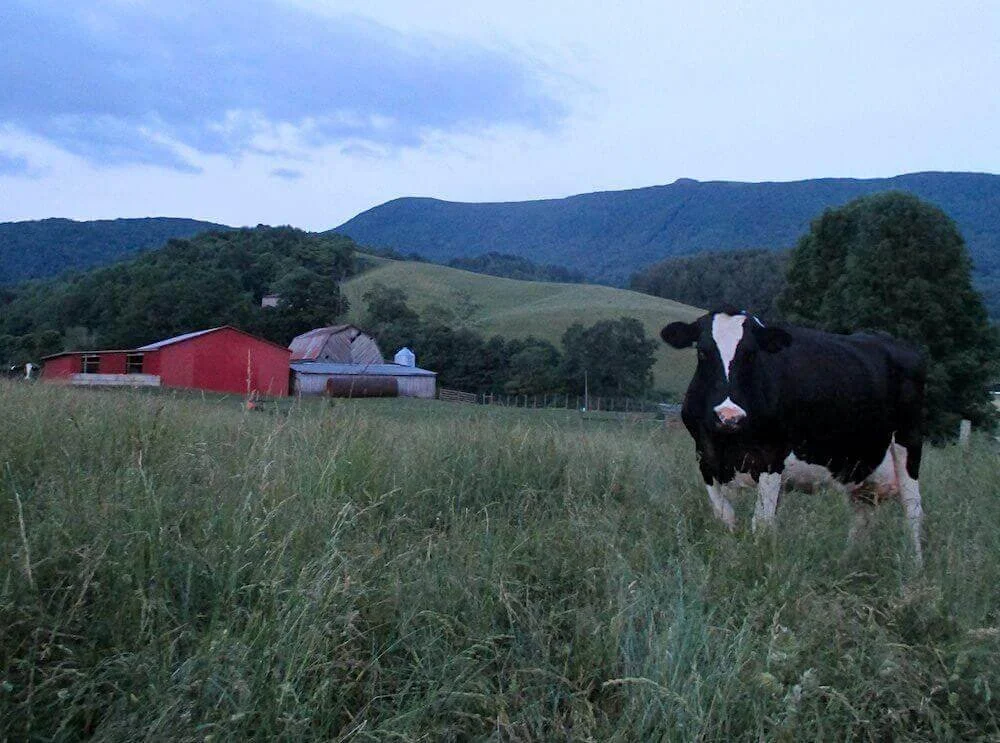
From protecting the local water supply to improving biodiversity among natural habitats, the Paulson family of Port Republic, Virginia, is doing their part to preserve our natural resources. Learn how they are committed to farming sustainably in celebration of Earth Month.
“Paulson Family Farm is a 360-cow dairy located in Port Republic, Virginia. One of our green initiatives has been to partner with the Natural Resources Conservation Service (NRCS) to plant over 2,000 native Virginian trees. The goal is to help strengthen the riverbank, reduce nutrient runoff, sequester carbon, and create a wildlife habitat for native birds and pollinators. Other green initiatives include bedded pack barns to upcycle nutrients from the herd as a comfortable source of bedding, no-till farming in combination with cover crops, and injecting manure in accordance with our nutrient management plan. Paulson Family Farm is proud to give back to the land as it gives so much to us.”
Sustainable Dairy at Deim Dairy
Denmark, SC
Did you know recycling water up to 4 times on a dairy farm is commonplace? Discover how Deim Dairy in Denmark, South Carolina, is doing just that to improve water conservation.
“We embrace a closed-loop circular process on our dairy farm which includes reusing the same gallon of water as many times as possible and using manure as a natural form of fertilizer. First water is used in a plate cooler to cool the milk before it gets to the milk tank. This process can typically cool the milk by about 20 degrees. Next, that same water goes into a flush tank where it’s stored until it’s used to flush the manure off the concrete cleaning the holding pen and feed lanes. It travels down into the lagoon where the water will be pumped out onto the fields through the center pivot and the solids that remain will be pumped out using these large specially designed tankers to fertilize the new crops before planting season. These designs are commonplace across dairy farms and a great example of how improving efficiency on farms is good for the planet as well as our bottom line.”

Davis Brothers Dairy and Sustainability
Philadelphia, TN
Increasing milk production while reducing inputs is the name of the game at Davis Brothers Dairy in Philadelphia, Tennessee. Samantha Craun shares some examples of what they are doing on the farm to upcycle manure and sand on their dairy.
“A sustainable practice on our farm is optimizing manure management. By using a composting system for manure and a sand separator you can reduce greenhouse gas emissions and produce nutrient-rich compost that can be used to fertilize crops or pasture. Additionally, the sand is recycled and reused for bedding. These measures help reduce our farm’s reliance on external fertilizers and bedding sources thus minimizing environmental impact.”
Murphy Dairy Farm and Sustainable Dairy
Gay, Georgia
Did you know that dairy farms can reduce waste in our food system by utilizing byproducts, or products that are left over from creating something else and usually seen as waste?
Some farms, like Murphy Dairy Farm in Georgia, are even able to source local byproducts to add nutrients to their cow’s feed. This leftover fruit they use comes from a processing plant that makes fruit salad for Walmart and Sysco.
“The cows will eat anything but the lemons and coconuts, but they will eventually even eat the coconuts if they’re broken open for them! We get 30 to 40 tons per week, and we also feed leftovers from bakeries as well including bread and sweet cakes. We try to limit the product to no more than 5 pounds per cow because the high fat in the breads start to affect the butterfat production in their milk. We try to include some of these byproducts to feed to all of our animals, including our beef cows as well.”
Related Posts